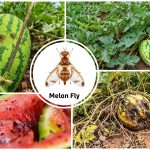
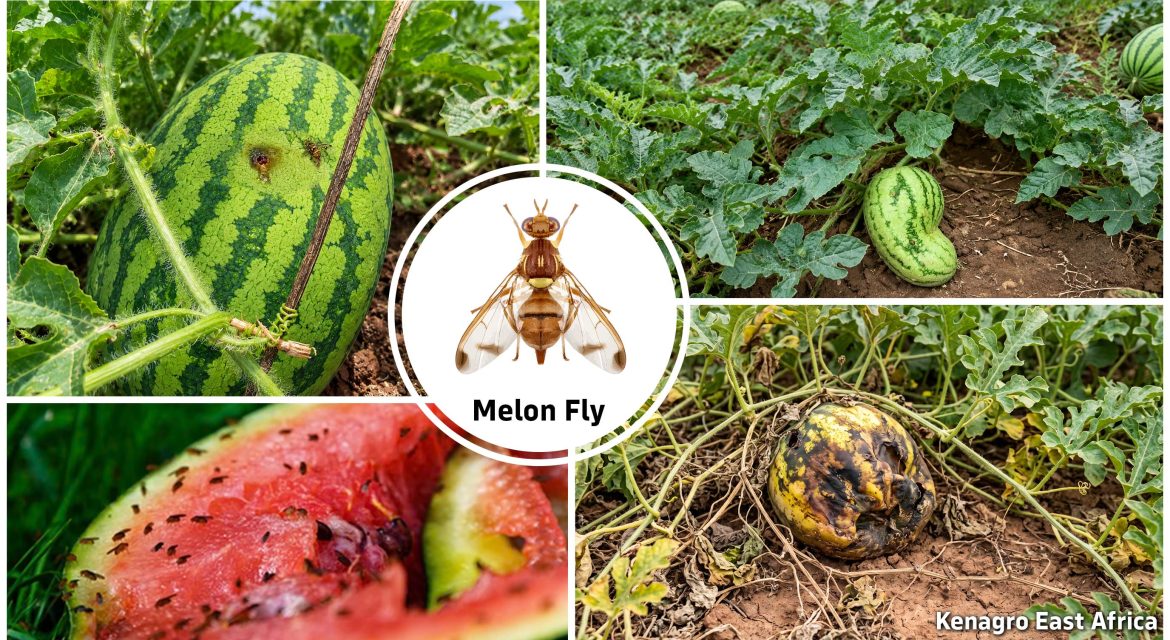
When it comes to profitable commercial farming, watermelons rank among the most lucrative fruit crops. However, watermelon farming can quickly become high-risk, leading to severe financial loss—and in extreme infestation cases, total yield loss caused by Melon Flies (Bactrocera cucurbitae).
Melon flies attack the crop primarily around flowering and fruit development. The greatest damage occurs when young, tender fruits become available for egg-laying. Because much of the destruction happens inside the fruit, early detection, proactive scouting, and targeted chemical control with dual-active insecticides like Emmaron 30 SC are critical to protecting your harvest and securing marketable yields.
What is the Melon Fly (Bactrocera cucurbitae)?
The melon fly (Bactrocera cucurbitae) is a widespread agricultural pest that attacks cucurbit crops, including watermelon, melon, cucumber, and pumpkin. Adults are slightly larger than common houseflies, featuring distinctive reddish-brown bodies, yellow markings on the thorax, and clear wings with dark spots.
Uncontrolled populations build up rapidly because female flies continuously lay eggs in developing fruit, making early intervention essential for every fruit grower.
Understanding the 4 Stages of the Melon Fly Life Cycle
To control melon flies effectively, farmers must understand how the pest develops across its four distinct life stages:
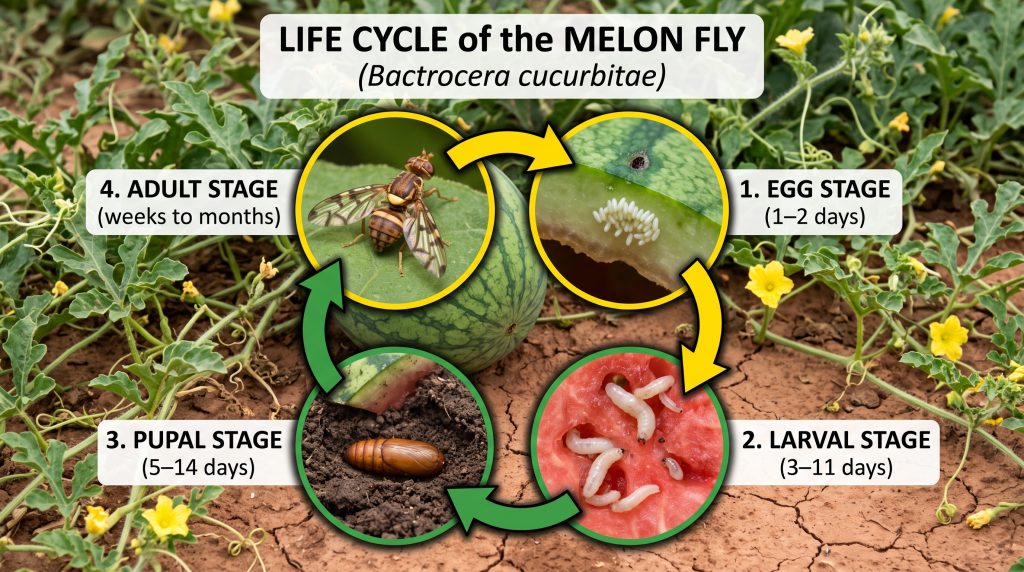
1. Egg Stage (2–4 Days)
Adult female melon flies use a needle-like organ called an ovipositor to pierce young watermelon skin and deposit eggs just beneath the rind.
What farmers see in the field:
- Small, pinpoint puncture marks on young developing fruits (sting marks).
- Watery fluid or clear sap oozing from fresh punctures.
- Brown, resinous spots forming around damaged tissue.
2. Larval or Maggot Stage (6–11 Days)
Once eggs hatch, white larvae—commonly called maggots—tunnel deep into the fruit flesh to feed. This is the most destructive stage because the larvae remain protected inside the fruit tissue.
What farmers see in the field:
- Soft, water-soaked patches on the fruit surface.
- Internal tissue breakdown and maggot tunnels.
- Secondary fruit rotting: Bacteria and fungi enter through oviposition wounds, accelerating internal decay.
- Deformed watermelons: Early-stage attacks lead to twisted, uneven fruit development.
- Premature fruit drop: Damaged young fruits stop growing and fall off the vine.
3. Pupal Stage (9–11 Days)
Mature larvae exit the rotting fruit and drop into the topsoil beneath the vine, where they transform into hard brown pupae. While pupae do not cause direct crop damage, soil pupation allows pest populations to persist between cropping cycles.
4. Adult Stage
Adult flies emerge from the soil to feed, mate, and reproduce. The total egg-to-adult cycle takes 12 to 28 days, depending on temperature and host availability. A single female can lay hundreds of eggs, starting the infestation cycle anew.
How Melon Flies Cause Economic Yield Loss
Leaving melon flies uncontrolled leads to severe financial penalties at harvest time:
- Reduced Market Value: Puncture marks and surface scarring make fruit unappealing to commercial buyers.
- Internal Pulp Decay: White maggots and secondary rot render fruit unconsumable.
- Deformed & Stunted Fruits: Attacked young melons develop abnormally, resulting in lower weights and poor sizing.
- Premature Fruit Drop: Unviable fruits detach from vines, reducing total yield per acre.
Integrated Pest Management (IPM) for Melon Flies in Watermelon
Relying solely on one control method is rarely sufficient. A successful Integrated Pest Management (IPM) program combines agronomic practices, scouting, monitoring, and strategic chemical application:
1. Maintain Strict Field Sanitation
Collect, remove, and destroy all infested, rotting, or fallen fruits from the farm daily. Never leave damaged melons lying between vines, as they serve as active breeding sites for larvae.
2. Remove Alternative Host Plants & Weeds
Clear surrounding vegetation and weeds that harbor adult melon flies. Removing host plants like wild cucurbits reduces pest survival around your fields.
3. Scout the Crop Regularly
Inspect watermelon vines twice weekly starting at early flowering. Look for adult flies resting under leaves, fresh fruit punctures, sap oozing, and early signs of deformation.
4. Install Pheromone & Baited Traps
Hang baited traps along field boundaries and within the crop canopy to monitor population build-up and kill adult flies before egg-laying begins.
5. Practice Crop Rotation
Avoid continuous cropping of watermelons or other cucurbits on the same land. Rotating with non-host crops disrupts the pest’s lifecycle in the soil.
Effective Chemical Control: Lufenuron + Emamectin Benzoate
When pest pressure increases, chemical control becomes vital. Combining active ingredients with complementary modes of action provides superior control while preventing insecticide resistance.
- Lufenuron (Insect Growth Regulator): Disruption of chitin synthesis prevents larvae from molting and developing normally, breaking the insect lifecycle at immature stages.
- Emamectin Benzoate (Insecticide): Acts rapidly via contact and ingestion, paralyzing insect larvae and suppressing feeding activity.
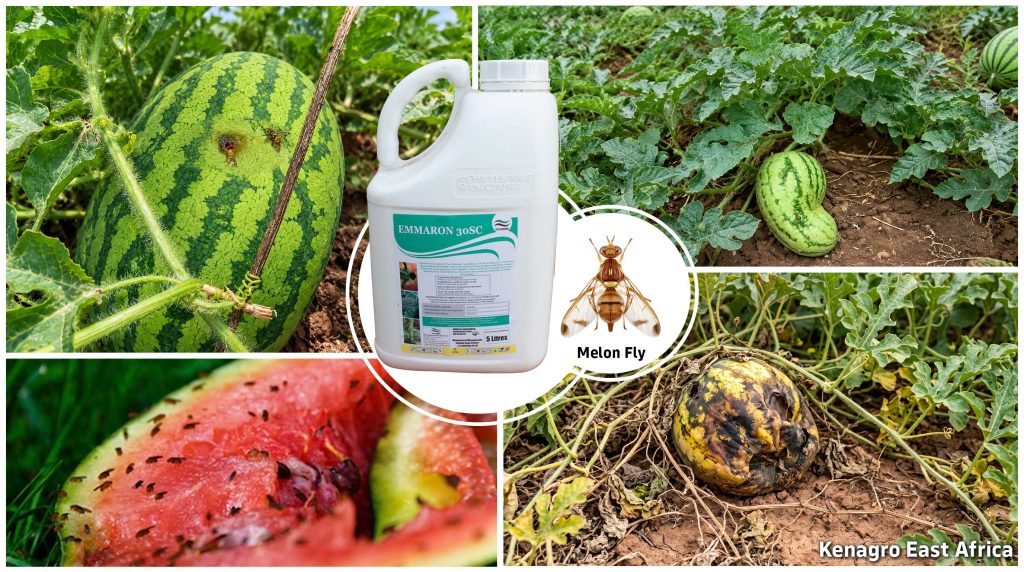
Recommended Product: Emmaron 30 SC
For dual-action control of melon flies and larval pests, Emmaron 30 SC (from Kenagro Suppliers Limited) delivers high efficacy by combining both proven active ingredients:
- Active Ingredient Composition: Lufenuron 100g/L + Emamectin benzoate 200g/L
- Formulation: Suspension Concentrate (SC)
- Application Dosage: 10 ml per 20 litres of water
Why Choose Emmaron 30 SC?
- Dual Mode of Action: Combines insect growth disruption (Lufenuron) with strong ingestion and contact feeding suppression (Emamectin benzoate).
- Resistance Management: Prevents pest resistance through complimentary chemical pathways.
- Internal Protection: Disrupts larval development before severe internal fruit rotting occurs.
Pro Tip for Farmers: Spray Emmaron 30 SC proactively during flowering and early fruit set. Once maggots enter deep inside the fruit tissue, chemical sprays become less effective because the larvae are shielded inside the rind.
Frequently Asked Questions (FAQs)
Q1: What causes watermelons to rot and fall off the vine early?
Secondary fruit rot caused by melon fly (Bactrocera cucurbitae) punctures is a leading cause. When female flies pierce the rind to lay eggs, bacteria and fungi enter the wound, causing internal decay and prompting the plant to drop unviable fruit prematurely.
Q2: How do I know if my watermelons have melon fly maggots inside?
Look for small puncture marks with dried sap, soft or discolored patches on the skin, deformed fruit shapes, and premature fruit drop. Cutting open affected fruit reveals white maggots feeding inside soft, rotted pulp.
Q3: When should I start spraying for melon flies in watermelons?
Begin spraying proactively at early flowering and fruit initiation. Applying Emmaron 30 SC at the first sign of adult fly activity prevents females from laying eggs in young, susceptible fruits.
Q4: What is the recommended application rate for Emmaron 30 SC?
Mix Emmaron 30 SC at a rate of 10 ml per 20 litres of water (or as directed on the registered label), ensuring complete and uniform foliage coverage.