Cabbage farming can give good returns, but pests can reduce yields very quickly. One of the most damaging pests in young cabbage plants is the cutworm. If not managed early, cutworms can destroy many seedlings in just one night.
This guide explains what cutworms are, their life stages, the damage they cause, and how to manage them using good farming practices and the right product.
What Are Cutworms?
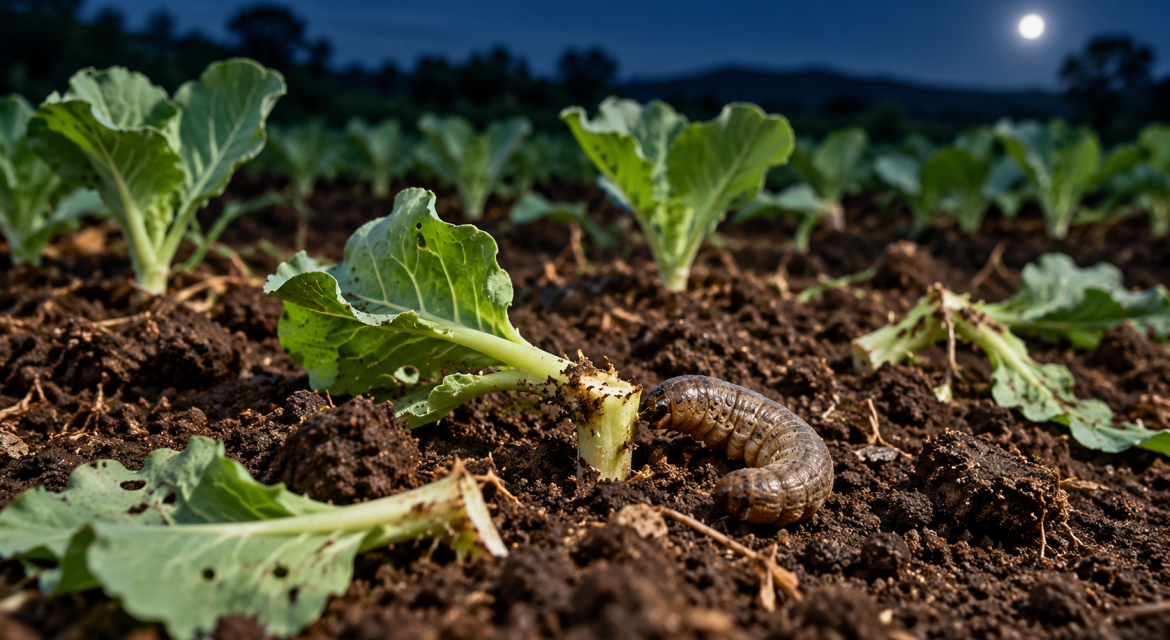
Cutworms are caterpillars that live in the soil.
They are the larvae (young stage) of night-flying moths. They hide in the soil during the day and come out at night to feed.
Cutworms mainly attack young cabbage seedlings by cutting them at the stem near the soil surface.
Life Stages of Cutworms and How They Affect Cabbage
Cutworms have four main stages:
1. Egg Stage
- Adult moths lay eggs in the soil or on plant leaves.
- Eggs hatch after a few days.
2. Larva Stage (Caterpillar Stage)
- This is the most destructive stage.
- The caterpillars stay in the soil.
- At night, they cut young cabbage stems at ground level.
- Seedlings fall over and die.
3. Pupa Stage
- The larva forms a pupa in the soil.
- Inside the pupa, it changes into a moth.
4. Adult Stage
- A moth emerges from the soil.
- It flies at night and lays more eggs.
- The cycle continues.
Signs of Cutworm Damage in Cabbage
Farmers may notice:
- Seedlings cut at the base
- Plants lying on the ground
- Missing plants in rows
- Uneven crop stand
- Sudden loss of young plants
Damage is usually worse in newly transplanted cabbage.
Effects If Left Uncontrolled
If cutworms are not managed:
- Large gaps appear in the field
- Replanting may be required
- Crop maturity becomes uneven
- Yields reduce
- Farmers lose money
Early management is very important, especially at transplanting.
Important Agronomic Practices to Manage Cutworms
Farmers can reduce cutworm problems by:
1. Proper Land Preparation
- Deep ploughing exposes larvae and pupae to sunlight and birds.
- This reduces their population.
2. Field Sanitation
- Remove weeds before planting.
- Cutworms hide in weedy fields.
3. Early Monitoring
- Inspect fields in the evening.
- Check soil around damaged plants for caterpillars.
4. Destroy Infected Plants
- Remove and destroy heavily damaged plants.
5. Timely Chemical Application
- Apply insecticide early when seedlings are small.
Best Active Ingredient to Control Cutworms
Lambda-cyhalothrin
Lambda-cyhalothrin is a powerful insecticide that:
- Kills cutworms quickly on contact
- Works through ingestion
- Provides fast knockdown
- Protects seedlings during early growth
- Has strong residual action
It is very effective against soil and leaf-feeding caterpillars like cutworms.
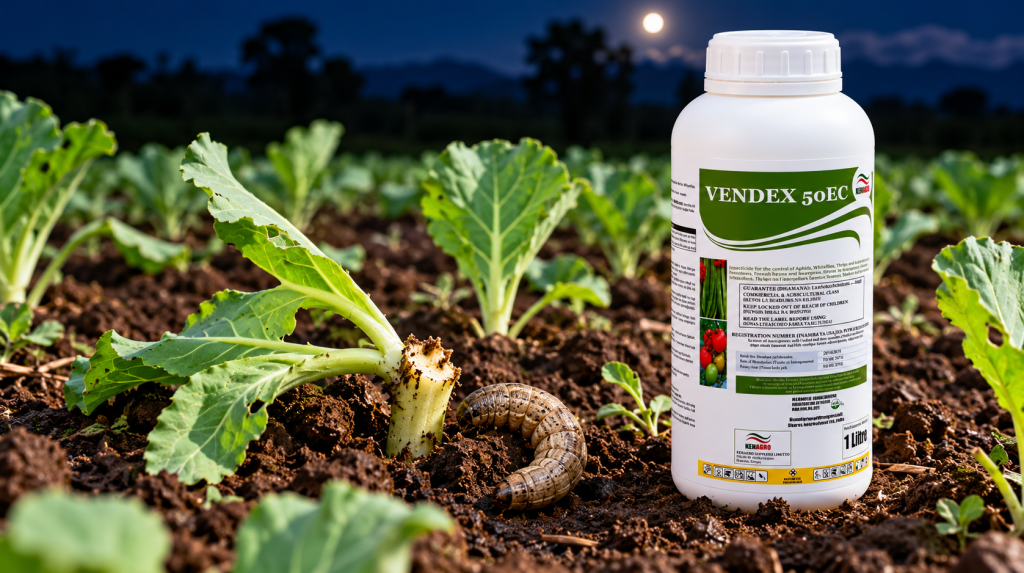
Recommended Product: Vendex 50EC
For effective control of cutworms, we recommend:
Kenagro Suppliers Limited – Vendex 50EC
Vendex 50EC contains:
- Lambda-cyhalothrin 50g/L
Why Choose Vendex 50EC?
- Fast action against cutworms
- Strong contact and stomach effect
- Protects young cabbage seedlings
- Reduces plant losses
- Improves crop stand and yield
- Helps farmers protect their investment
For best results:
- Apply at transplanting or at first signs of damage.
- Spray in the evening when cutworms are active.
- Follow recommended dosage instructions.
Final Advice to Farmers
Cutworms can destroy your cabbage crop at an early stage.
✔ Prepare land well
✔ Keep fields clean
✔ Monitor seedlings closely
✔ Use effective products like Vendex 50EC from Kenagro Suppliers Limited
Early protection ensures uniform growth, strong plants, and better harvests.