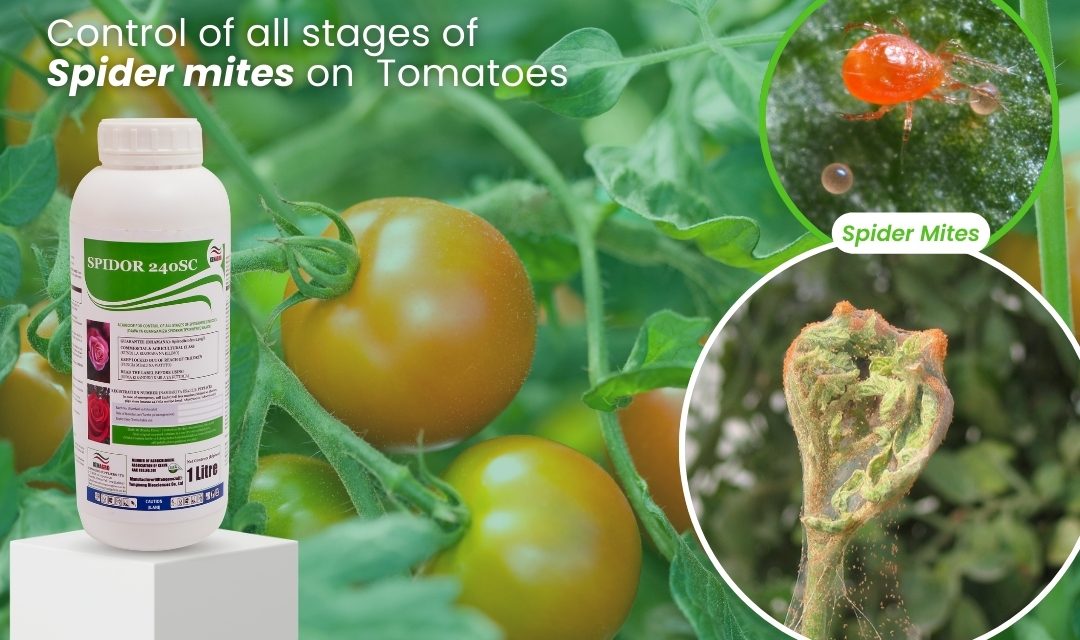
Controlling spider mites on tomatoes is essential for maintaining a healthy crop and securing strong market profits. When infestations strike, farmers notice leaves turning yellow, drying from the edges, or carrying a dusty appearance. If you look closely under the leaves, you will find tiny moving pests protected by fine webs. Fortunately, using a specialized miticide like SPIDOR 240SC can eliminate the problem early and protect your farm’s bottom line.
What Are Spider Mites on Tomatoes?
Spider mites are microscopic sucking pests. While they look like insects, they are actually arachnids closely related to spiders. The most prominent species attacking local farms is the Two-spotted Spider Mite (Tetranychus urticae). Because they reside on the underside of leaves and produce fine protective webs, they often go unnoticed until massive damage has already occurred.
Environmental Triggers for Rapid Outbreaks
Spider mite populations multiply at an alarming velocity, especially when the following conditions are met:
- Hot Weather: High temperatures accelerate their reproductive cycle.
- Dry Conditions: Lack of moisture weakens plants and favors mite development.
- Dusty Fields: Dust on leaves interferes with natural predators.
- Greenhouse Environments: Protected structures create a perfect microclimate for outbreaks.
Understanding the Stages of Spider Mites on Tomatoes
To effectively manage an infestation, farmers must understand how rapidly these pests develop. The life cycle transitions through four distinct stages: Eggs, Larvae, Nymphs, and Adults. In optimal hot weather, they complete this entire cycle in just 7 to 10 days, leading to an aggressive, exponential population explosion.
How Spider Mites Damage Tomatoes
Stage 1: Light Infestation (The Ideal Window for Treatment)
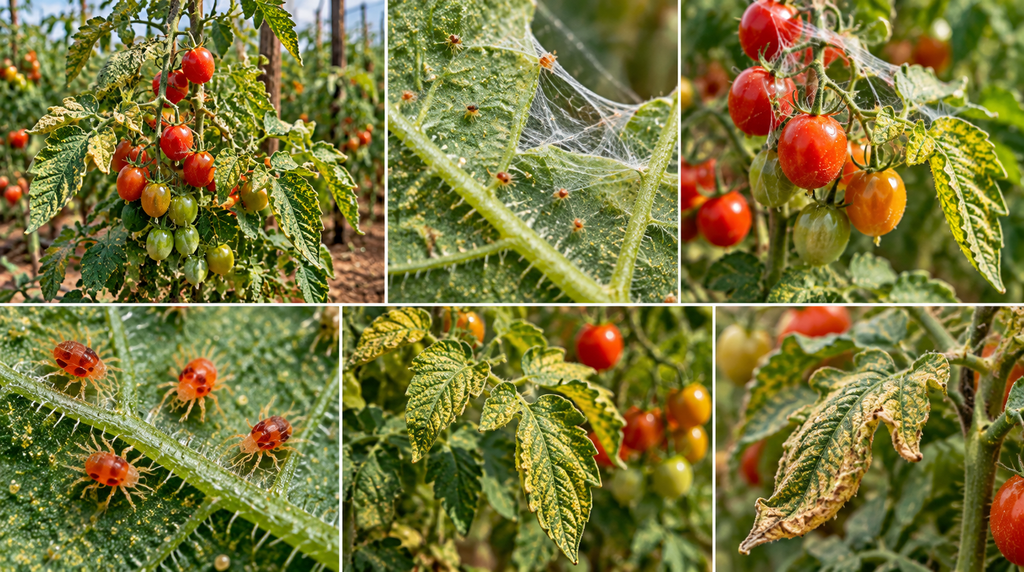
- Small white or yellow spots (speckling) appear on the upper leaf surface.
- Damage typically initiates on the lower, older leaves.
- This is the absolute best time to apply SPIDOR 240SC before population expansion.
Stage 2: Heavy Feeding & Structural Stress
- Foliage turns a distinct yellow or bronze color.
- Prominent, fine webs become highly visible under the leaves.
- Leaves begin to curl inward as the plant experiences high physiological stress.
Stage 3: Severe Crop Damage
Total plant growth stalls, causing yields to drop by 30% to 80%..
Affected leaves completely dry up and drop off the plant.
Developing fruits remain small, stunted, and unsellable.
How Much Damage Can Spider Mites Cause?
If not controlled:
- Yield losses can reach 30%–80%.
- Fruit size and quality reduce.
- Plants become weak and stressed.
Spider mites are dangerous because they multiply very fast. A small problem today can become a serious outbreak in one to two weeks.
Early control is very important.
5 Critical Agronomic Practices to Prevent Spider Mites
Integrating defensive cultural practices makes it significantly harder for spider mite populations to build up in your tomato fields.
1. Maintain strict field hygiene
Regularly eliminate weeds around your crop plots because wild vegetation acts as a secondary host for pests. Always destroy and bury crop residues immediately after harvest to stop the breeding cycle.
2. Suppress dust accumulation
Since spider mites thrive in dusty conditions, periodically water your farm access roads, minimize unnecessary soil disturbance, and utilize organic mulching to keep dirt off the leaves.
3. Implement precise irrigation management
Avoid putting your tomato plants under water stress. Utilizing consistent drip irrigation helps maintain optimal soil moisture, ensuring healthy, well-hydated plants that are naturally more resilient against pest attacks.
4. Conduct weekly field scouting
Never wait for heavy webbing to appear. Turn over lower leaves weekly to look for early yellow speckling. Early detection allows for targeted, cost-effective spraying.
5. Avoid broad-spectrum insecticide misuse
Spraying harsh, generic chemicals often kills the beneficial predatory insects that naturally eat spider mites. When these natural enemies are wiped out, it triggers a massive “mite flare.” Instead, always opt for a targeted solution like SPIDOR 240SC.
Why SPIDOR 240SC is the Ultimate Solution for Tomato Spider Mite
When cultural prevention isn’t enough, you need a high-performance chemical solution designed specifically to target mites without harming your crop’s development. This is where SPIDOR 240SC steps in as the premier choice for modern farmers.
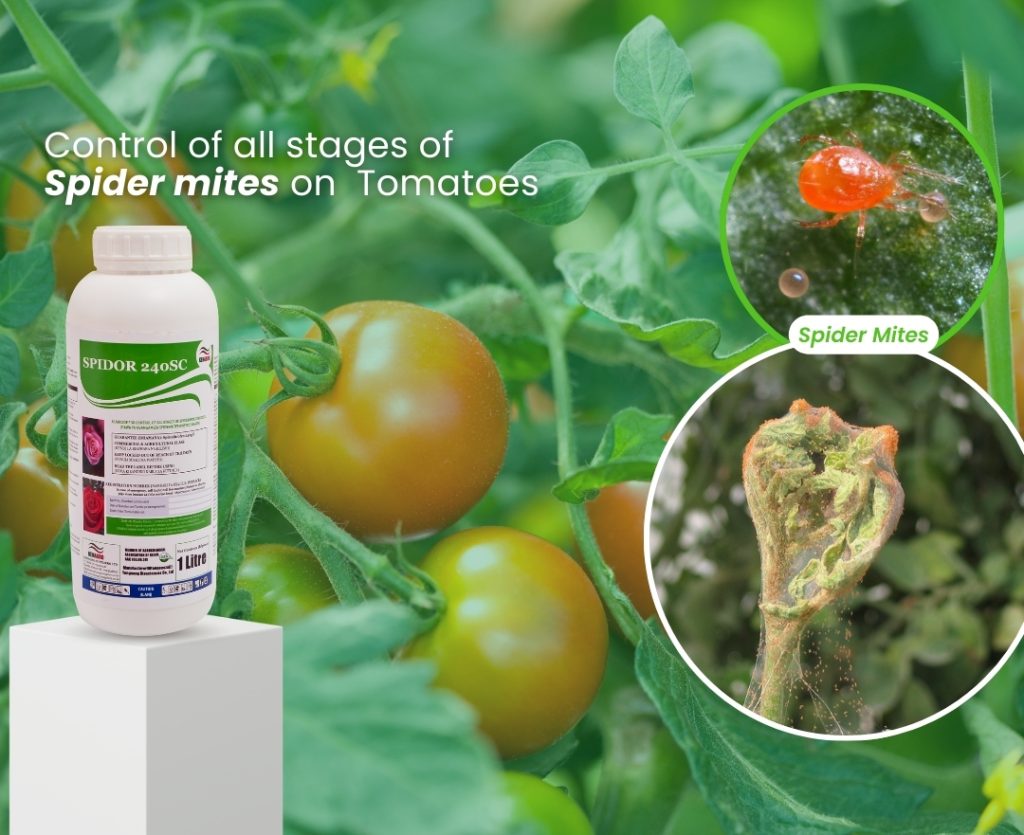
The Power of Spirodiclofen Active Ingredient
SPIDOR 240SC is formulated with Spirodiclofen, a highly advanced, specialized active ingredient belonging to the tetronic acid chemical class. Unlike basic insecticides, Spirodiclofen works as a powerful growth inhibitor.
Long-Lasting Residual Control: It binds safely to the waxy layer of the tomato leaf, providing extended protection for weeks after application.
Breaks the Life Cycle: It specifically targets and eliminates the egg, larvae, and nymph stages, preventing young mites from reaching reproductive maturity.
Reduces Adult Fertility: When adult female mites come into contact with it, their reproductive capacity drops significantly, halting further egg production.
Conclusion and Recommendations
Don’t let spider mites steal your tomato profits this season. By pairing good cultural field practices with timely applications of SPIDOR 240SC, you can keep your crops green, healthy, and highly productive.
For optimal results, apply SPIDOR 240SC at the very first sign of leaf speckling, ensuring thorough spray coverage on both the top and underside of the leaves.