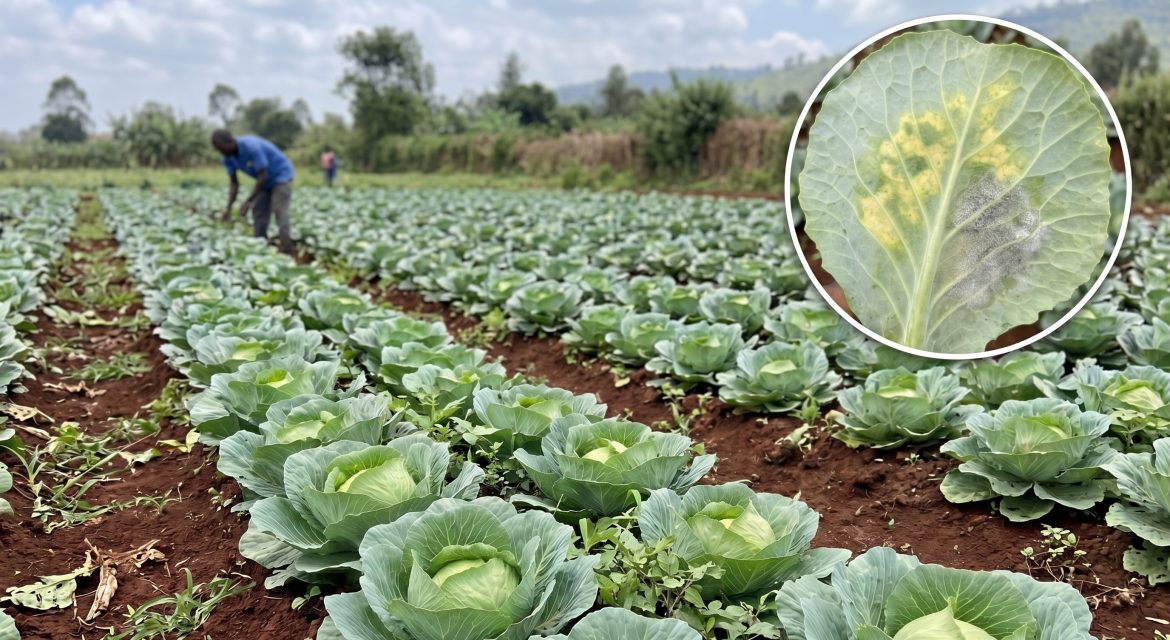
Cabbage farming can yield excellent profit margins, but fungal and bacterial infections can drastically reduce yield and head quality if left unmanaged. Among the most damaging fungal threats to cabbage crops are Downy Mildew and Alternaria Leaf Spot (Cabbage Leaf Blight).
When these conditions strike during cool, wet seasons, farmers can lose over 50% of their harvest. This guide breaks down the core symptoms of cabbage leaf diseases, agronomic prevention measures, and how to effectively apply Tajiri 720WP for complete protection.
Quick Reference: Cabbage Disease Identification & Spray Matrix
| Disease | Primary Symptoms | Favorable Weather | Tajiri 720WP Dosage |
| Downy Mildew (Peronospora parasitica) | Yellow patches on top of leaves; grey or white fluffy mold underneath; leaf curling. | Cool, rainy, high humidity (over 85%) | 40g per 20L water |
| Alternaria Leaf Spot / Blight (Alternaria brassicicola) | Small brown/black target-like concentric rings; older leaves yellow and dry prematurely. | Warm, humid conditions with frequent rainfall | 40g per 20L water |
1. What is Downy Mildew in Cabbage?
Downy Mildew is a destructive fungal-like infection that targets cruciferous vegetables, particularly during nursery development and early field planting.
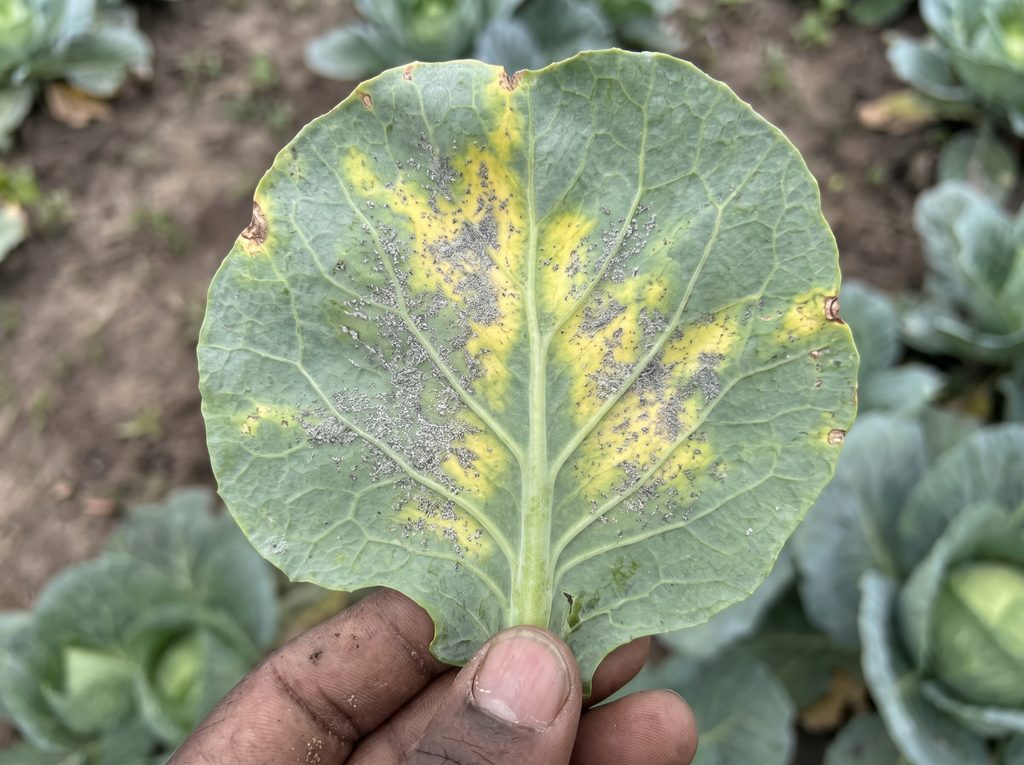
How Downy Mildew Appears
- Upper Leaf Surface: Irregular yellow or light-green patches.
- Underneath Leaf: A white to grey downy or fluffy growth directly opposite the yellow patches.
- Severe Stages: Leaves dry out, curl, and drop, resulting in stunted cabbage head formation.
Downy Mildew spreads rapidly when cool weather is accompanied by persistent dew or rain.
2. What is Alternaria Leaf Spot (Cabbage Blight)?
Alternaria Leaf Spot—frequently referred to by growers as Cabbage Blight—is a persistent fungal disease affecting older outer leaves first.
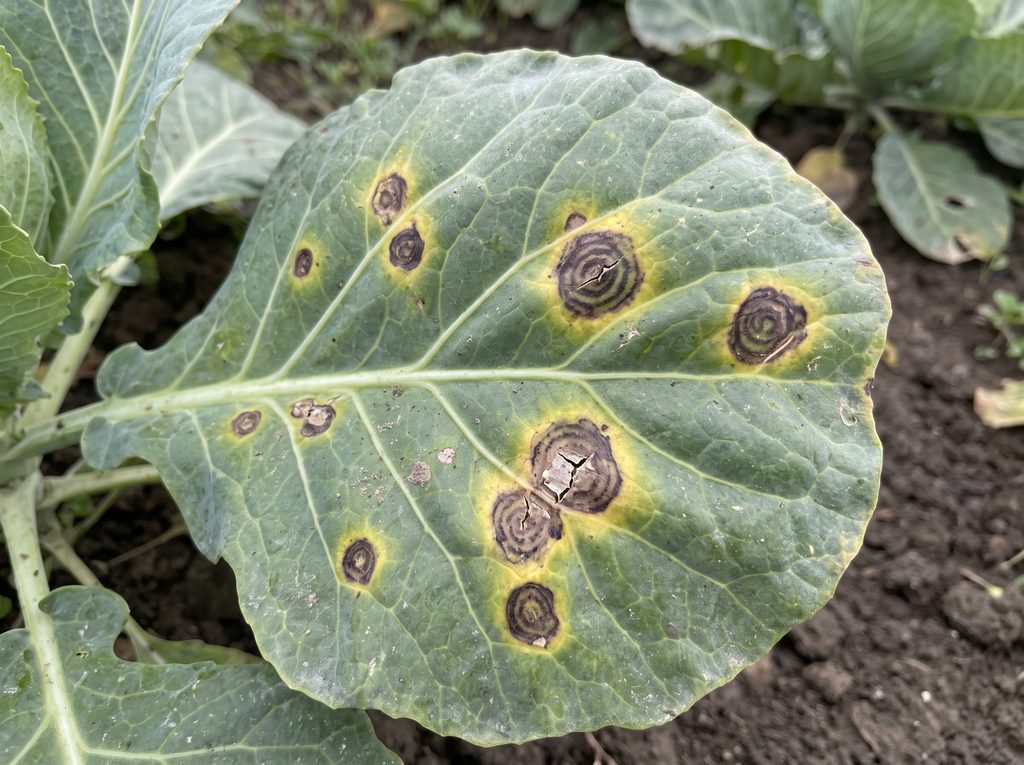
How Cabbage Leaf Blight Appears
- Dark brown or black circular spots on mature leaves.
- Target-board appearance with visible concentric rings inside the spots.
- Affected leaf tissue turns yellow, dries up, and drops prematurely.
If uncontrolled, the loss of outer foliage reduces the plant’s ability to photosynthesize, leading to soft, undersized, or unmarketable cabbage heads.
The Impact of Uncontrolled Cabbage Diseases
Failure to implement early preventative and curative sprays leads to:
- Destruction of leaf tissue needed for head development.
- Formation of loose, light, or small cabbage heads.
- Market rejections due to cosmetic leaf damage.
- Total field failure during heavy rainy seasons.
Important Agronomic Practices to Prevent Fungal Outbreaks
Chemical management works best when paired with sound agronomic practices:
- Proper Plant Spacing (45 cm x 60 cm): Prevents canopy overcrowding and maximizes airflow to lower field humidity.
- Avoid Overhead Irrigation: Watering at the plant base keeps foliage dry, preventing fungal spores from germinating.
- Field Hygiene: Promptly remove and destroy infected lower leaves and post-harvest crop residues.
- Crop Rotation: Rotate cabbages with non-brassica crops (such as onions, legumes, or maize) to break soil-borne spore cycles.
The Solution: Dual-Action Control with Tajiri 720WP
For reliable prevention and treatment of Downy Mildew and Alternaria Leaf Spot, Tajiri 720WP from Kenagro Suppliers Limited provides a dual-action defense:
- Mancozeb (640g/kg): A broad-spectrum contact fungicide that coats the leaf surface to form a protective shield against incoming fungal spores.
- Cymoxanil (80g/kg): A translaminar/systemic fungicide that penetrates the leaf to stop infections that have already entered the plant.
Application Rates and Spray Instructions for Tajiri 720WP
- Knapsack Dosage: Mix 40g of Tajiri 720WP per 20L water sprayer.
- Per-Hectare Rate: 2.0 kg per hectare in 500–1,000L of water, ensuring full coverage.
- Preventative Spraying: Apply every 10–14 days during cool or humid conditions before symptoms appear.
- Curative Spraying: At the first sign of leaf spots or downy patches, apply every 7–10 days.
- Pre-Harvest Interval (PHI): Observe a 7-day waiting period between the last application and harvest.
Pro-Tip: Because Downy Mildew growth occurs mainly on the underside of leaves, direct spray nozzles upward to thoroughly coat the undersides of the foliage. During rainy periods, add an agricultural sticker/spreader to prevent wash-off.