The ultimate goal of a farmer is to ensure that every season reaps high and profitable yields. But to achieve this, your crops need more than water and sunlight. They also need the right nutrients to grow well and produce quality yields.
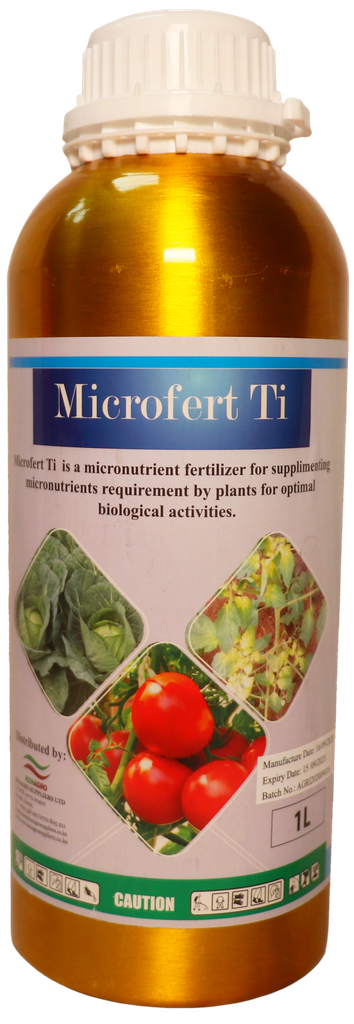
This is where Microfert-Ti comes in.
Microfert-Ti is a titanium-based foliar and fertigation fertilizer formulated with manganese (Mn), zinc (Zn), iron (Fe), and boron (B). It helps support important plant processes, including photosynthesis, nutrient uptake, and enzyme activity, which contribute to healthy crop development.
Whether you grow coffee, avocadoes, other fruits, vegetables, legumes, or cereals, Microfert-Ti can be a useful addition to your crop nutrition programme.
So, what can it do for your crops, and why should you consider using it?
1. Why Is Microfert-Ti Important for Your Crops?
Microfert-Ti is designed to support several important processes in your plants.
It supports photosynthesis, which ensures that the green leaves capture sunlight and make the energy they need for growth. Iron and manganese play important roles in photosynthesis, while zinc supports several plant enzymes and growth processes.
It helps support nutrient uptake and use. Microfert-Ti is formulated to help plants make better use of available nutrients. When used alongside proper soil fertility management, it can complement your existing fertilizer programme.
It supports crop growth and development. The micronutrients in Microfert-Ti contribute to essential plant functions, helping crops develop when their nutritional needs are met.
It supports crop quality. Proper nutrition is important for fruit development, colour, and other quality characteristics. Microfert-Ti is designed to support these processes as part of good crop management.
In simple terms, Microfert-Ti helps you give your crops additional nutritional support as they grow.
2. Microfert-Ti Benefits on your Crops
Healthy leaves are important for your crops because they help the plant produce the energy it needs for growth and fruit development.
Microfert-Ti supplies micronutrients that support photosynthesis, enzyme activity, and other essential plant processes.
When used as part of a balanced crop nutrition programme, it can help support healthy vegetative growth and the development of your crop.
Supporting Fruit Development and Quality
When it comes to the farming of fruits, producing fruit is only part of the goal. You also want good fruit size, attractive colour, and produce that maintains its quality after harvesting.
Microfert-Ti provides micronutrients that support important plant functions involved in growth and fruit development. Its formulation is intended to support fruit quality, colouration, and sugar accumulation where these responses are limited by crop nutrition.
Whether you grow avocadoes, mangoes, citrus, or other fruit crops, proper nutrition is an important part of helping your plants reach their production potential.
Remember that fruit size, colour, sweetness, and shelf life also depend on the crop variety, maturity at harvest, water management, weather, and post-harvest handling.
Encourages Healthy and Marketable Vegetables Produce
If you grow tomatoes, onions, cabbages, capsicums, or other vegetables, you know that crop quality matters just as much as quantity.
Microfert-Ti supplies manganese, zinc, iron, and boron, which play different roles in plant growth and development.
Depending on the crop and its nutritional needs, correcting micronutrient limitations can help improve crop performance and the quality of marketable produce.
For fruiting vegetables, proper nutrition is particularly important as the plants move through flowering and fruit development.
Support Growth and Plant Development in Legumes.
Legumes such as beans, peas, and other pulses need balanced nutrition to grow and produce well.
Microfert-Ti can supplement the micronutrients needed for essential plant processes during vegetative growth.
Good nutrition, together with appropriate soil management, helps create favourable conditions for plant development, flowering, and pod formation.
Remember that legumes also depend on effective nodulation, appropriate soil conditions, and good moisture management. Microfert-Ti should complement these practices rather than replace them.
3. How Should You Apply Microfert-Ti?
One of the advantages of Microfert-Ti is that it can be applied through foliar spraying or root and drip irrigation, depending on your farming system and the product instructions.
Option 1: Foliar Application
Foliar application delivers the product directly to the crop’s leaves.
- Application rate: 20 ml per 20 litres of water.
- Equivalent stated rate: 500 ml per hectare in 1,000 litres of water.
- Frequency: Spray 3–4 times during vegetative growth.
- Interval: Allow 15 days between applications.
Apply the product according to the crop’s growth stage and the instructions on the label.
Option 2: Root Irrigation or Drip Irrigation
For farmers using fertigation systems, Microfert-Ti can also be applied through root irrigation or drip irrigation.
- Application rate: 10 litres per hectare, diluted with water.
- Frequency: Follow the same general programme of 3–4 applications during vegetative growth, at intervals of 15 days, as provided in the product instructions.
Always follow the label instructions, use appropriate protective equipment, and avoid applying the product under unsuitable weather conditions.
4. What Is the Difference Between Crops That Receive Proper Nutrition and Those That Don’t?
Here are some differences that may be seen when nutritional limitations are corrected:
- Leaf health and growth – Correcting micronutrient deficiencies can support healthier leaf function and normal crop development.
- Photosynthesis – Adequate iron and manganese are important for normal photosynthetic activity.
- Crop quality – Balanced nutrition can contribute to desirable quality characteristics, depending on the crop and its specific needs.
- Harvest potential – Addressing nutrient deficiencies can help crops achieve more of their yield potential.
- Fruit development – Appropriate nutrition can support normal fruit development, although fruit size, colour, and sweetness depend on several factors.
You work hard to prepare your land, plant your crops, manage weeds, and protect your farm from pests and diseases. Your crop nutrition programme is another important part of that effort.
Support healthy growth, better crop quality, and your harvest potential, by incorporating Microfert TI in you sprayregimen.
