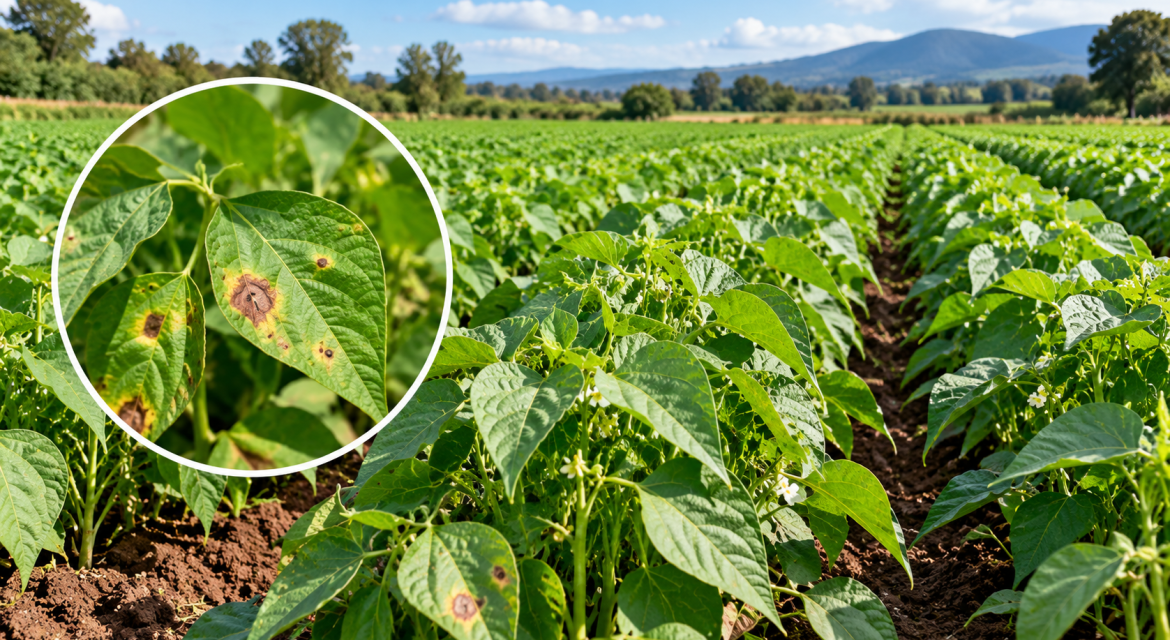
Beans are an important food and cash crop for many farmers. However, they are often affected by diseases, one of the most common being leaf spots. If not managed early, leaf spots can reduce both the quality and quantity of your harvest.
What Are Leaf Spots in Beans?
Leaf spots are diseases that appear as small, visible spots on bean leaves. They are usually caused by fungi or bacteria and spread easily under warm and wet conditions.
How Leaf Spots Manifest
Leaf spots can show up in different ways, but common signs include:
- Small brown, black, or reddish spots on leaves
- Spots that may grow bigger and join together
- Yellowing around the spots
- Leaves drying, curling, or falling off early
- In severe cases, spots may also appear on stems and pods
These symptoms often start on older leaves and spread to younger ones if not controlled.
Effects of Leaf Spots on Beans
If leaf spots are not managed, they can cause serious damage:
- Reduced photosynthesis: Damaged leaves cannot make enough food for the plant
- Stunted growth: Plants become weak and underdeveloped
- Lower yields: Fewer pods and smaller beans
- Poor quality produce: Beans may be discolored or unmarketable
- Early plant death: In severe infections
In short, ignoring leaf spots can lead to significant losses.
Agronomic Practices for Control
Good farming practices are the first line of defense against leaf spots:
- Use clean, certified seeds
This helps prevent introducing disease into your field. - Practice crop rotation
Avoid planting beans in the same field season after season. Rotate with crops like maize or cereals. - Ensure proper spacing
Well-spaced plants allow air circulation, reducing moisture that encourages disease. - Field sanitation
Remove and destroy infected plant residues after harvest. - Avoid overhead irrigation
Water on leaves promotes the spread of disease. Use methods that keep foliage dry when possible. - Plant resistant varieties (if available)
Some bean varieties are more tolerant to leaf spot diseases.
Chemical Control
When leaf spots start to appear or conditions favour disease development, chemical control becomes necessary.
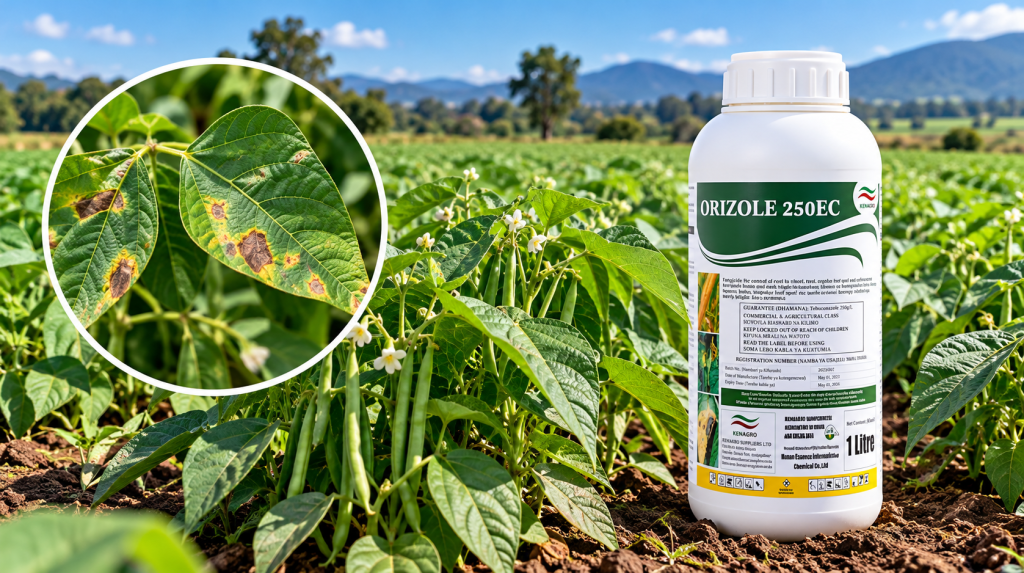
A highly effective active ingredient for controlling leaf spots is Tebuconazole. It works by stopping the growth of the fungus, preventing further spread.
Recommended Product: Orizole 250EC
- Contains Tebuconazole 250g/L
- Provides effective protection and control of leaf spot diseases
- Helps restore plant health and improve yield
How to Use
- Apply at the early stages of disease detection
- Follow recommended dosage and spraying intervals as per label instructions
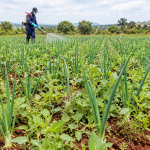
- Ensure thorough coverage of the leaves
- Repeat application if necessary, depending on disease pressure.
Leaf spots in beans can be destructive, but they are manageable with the right approach. Combining good agronomic practices with timely chemical control using Tebuconazole (Orizole 250EC) offers an effective solution. Early detection and action are key. Healthy leaves mean healthy plants—and ultimately, a better harvest.