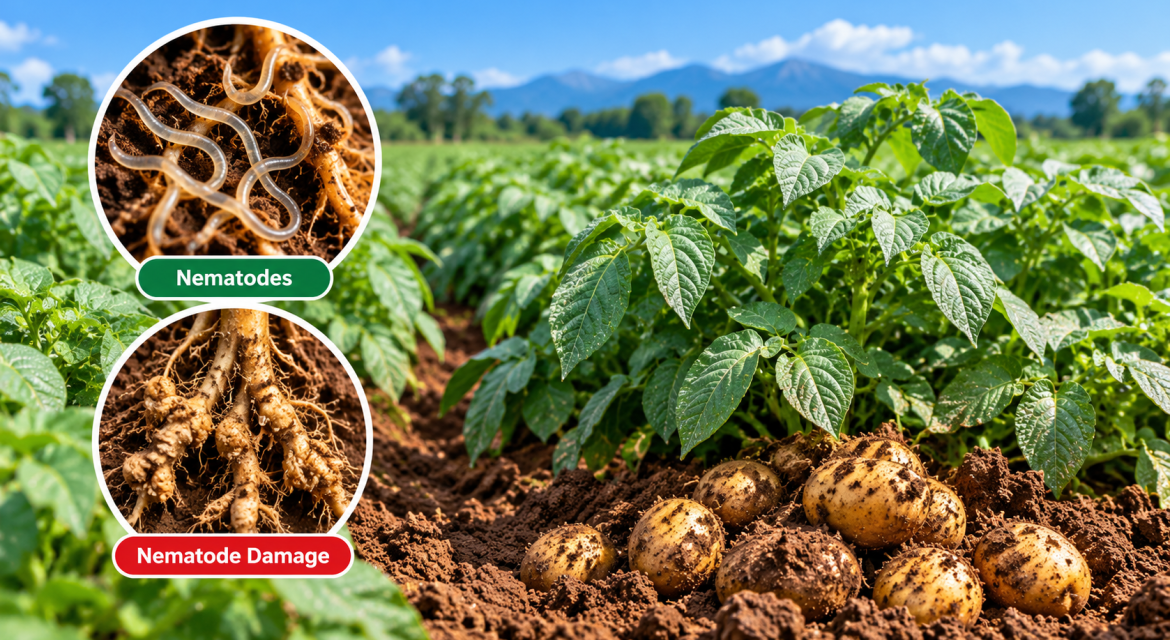
Potatoes are an important food and cash crop. However, many farmers lose yield because of nematodes. Nematodes are small worms that live in the soil and attack plant roots. They are very small and cannot be seen with naked eyes, but they can cause serious damage.
This guide explains what nematodes are, how they attack potatoes, the damage they cause, and how to control them using good farming practices and the right product.
What Are Nematodes?
Nematodes are tiny worms found in the soil. Some are harmless, but others attack crops.
In potatoes, the most common harmful nematodes are:
- Root-knot nematodes
- Potato cyst nematodes
They feed on potato roots and reduce the plant’s ability to absorb water and nutrients.
How Many Stages Do Nematodes Have and How Do They Affect Potatoes?
Nematodes have four main life stages:
1. Egg Stage
- Eggs are laid in the soil or on roots.
- They hatch when conditions are favorable.
2. Juvenile Stage (Young Worms)
- Young nematodes move in the soil.
- They enter potato roots and start feeding.
3. Feeding Stage
- Nematodes feed inside the roots.
- Roots become swollen or form galls (knots).
- Water and nutrient uptake is reduced.
4. Adult Stage
- Mature nematodes reproduce.
- The population increases quickly in the soil.
- Damage becomes worse each season.
Signs of Nematode Damage in Potatoes
Farmers may notice:
- Stunted plant growth
- Yellowing leaves
- Wilting even when soil has moisture
- Poor tuber size
- Fewer potatoes per plant
- Knots or swellings on roots
Since nematodes attack underground, damage is often noticed too late.
Effects If Left Uncontrolled
If nematodes are not controlled:
- Yields can drop heavily
- Potato size becomes small
- Quality reduces
- Soil becomes heavily infested
- Losses continue season after season
Early control is very important.
Important Agronomic Practices to Control Nematodes
Farmers can reduce nematodes by practicing good farm management:
1. Crop Rotation
- Rotate potatoes with non-host crops like cereals.
- Avoid planting potatoes repeatedly on the same land.
2. Use Clean Seed
- Plant certified, disease-free seed potatoes.
- Avoid using infected seed.
3. Field Hygiene
- Remove crop residues after harvest.
- Destroy infected plants.
4. Proper Soil Preparation
- Deep ploughing exposes nematodes to sunlight.
- This helps reduce their population.
5. Good Soil Fertility
- Healthy plants tolerate nematode damage better.
- Apply recommended fertilizers and organic matter.
Best Active Ingredients to Control Nematodes
For effective control, strong and reliable active ingredients are needed.
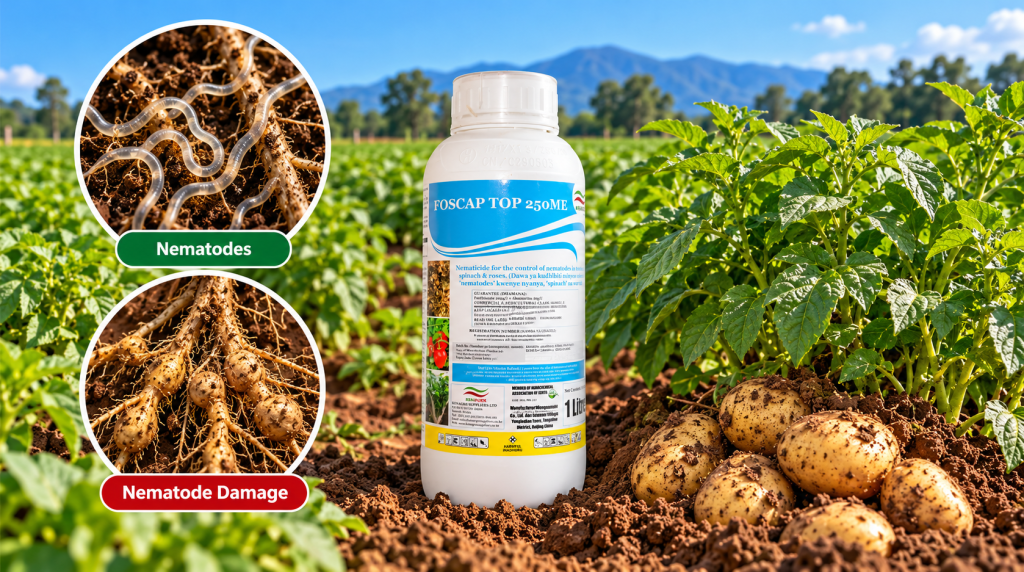
1. Fosthiazate
- Works directly in the soil.
- Kills nematodes when they feed on treated soil.
- Reduces nematode population quickly.
- Protects young roots from early attack.
2. Abamectin
- Has strong contact and stomach action.
- Paralyzes and kills nematodes.
- Protects roots from further feeding damage.
- Provides long-lasting protection in the soil.
When combined, these two active ingredients provide powerful and broad control of nematodes, protecting the crop from planting to early growth stages.
Recommended Product: Foscap Top 250ME
For effective nematode control, we recommend:
Kenagro Suppliers Limited – Foscap Top 250ME
Foscap Top 250ME contains:
- Fosthiazate 200g/L
- Abamectin 50g/L
Why Choose Foscap Top 250ME?
- Dual action control
- Fast knockdown of nematodes
- Protects roots during early growth
- Improves root development
- Leads to bigger and healthier tubers
- Helps farmers achieve higher yields
For best results:
- Apply at planting or before planting.
- Follow recommended dosage instructions.
- Ensure proper soil coverage.
Nematodes are silent destroyers of potato crops.
✔ Practice crop rotation
✔ Use clean planting materials
✔ Maintain good field hygiene
✔ Apply effective products like Foscap Top 250ME from Kenagro Suppliers Limited
Early soil protection leads to stronger plants, bigger potatoes, and better profits. Healthy roots mean healthy harvests.