Whiteflies are tiny insects that can cause big problems for farmers. They attack many crops, especially vegetables and beans, by feeding on plant sap and spreading diseases. If not controlled early, they can quickly multiply and damage entire fields.
So what Are Whiteflies?
Whiteflies are very small, white, winged insects usually found on the underside of leaves. When disturbed, they fly up in a small cloud, which makes them easy to notice.
Stages of Whiteflies and How They Develop
Whiteflies go through four main stages:
- Eggs
- Laid on the underside of leaves
- Very small and difficult to see
- Nymphs (crawlers)
- After hatching, they move briefly, then settle and attach to the leaf
- They are flat, oval, and look like tiny scales
- Pupal stage
- They remain fixed on the leaf
- This is a resting stage before becoming adults
- Adults
- Small, white, winged insects
- Responsible for spreading and laying more eggs
Whiteflies multiply very fast, especially in warm conditions, which makes them hard to control if ignored.
How Whiteflies Affect Crops
Whiteflies damage crops in several ways:
- Sucking plant sap: This weakens the plant
- Yellowing of leaves: Leaves turn pale and unhealthy
- Leaf curling and drying: Leaves may twist and fall off
- Stunted growth: Plants do not grow properly
- Reduced yields: Fewer and smaller produce
- Sooty mold development: A black, sticky substance (from their honeydew) forms on leaves, blocking sunlight
- Spread of diseases: Whiteflies can transmit viral diseases from one plant to another
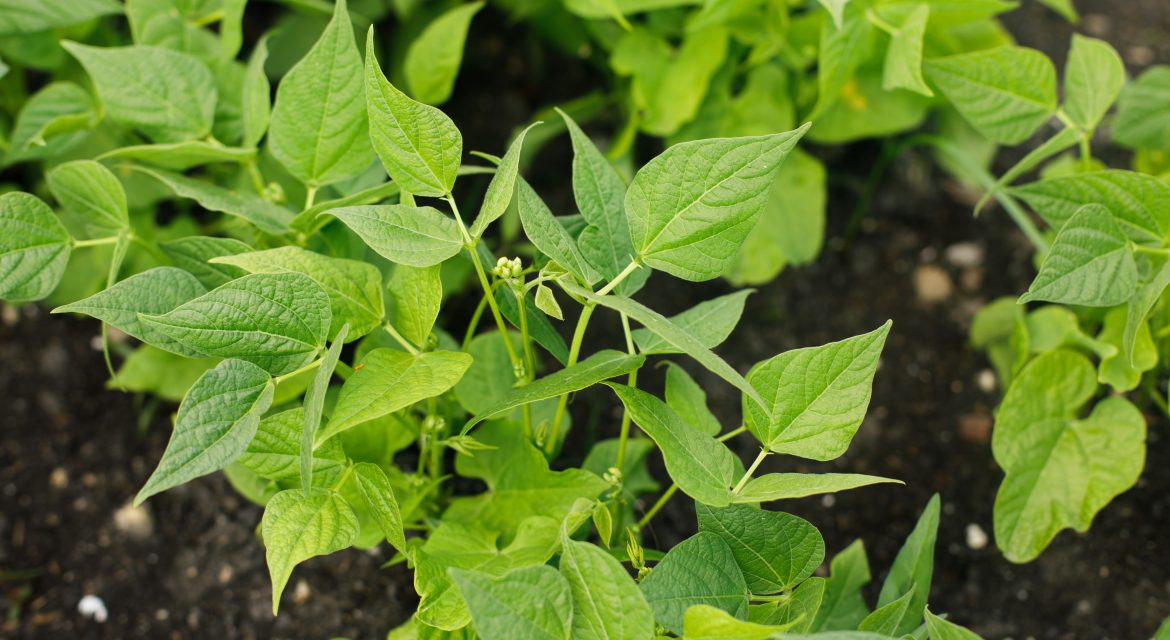
How to know that your beans have been attacked by the Whiteflies, even without seeing them:
A crop heavily attacked by whiteflies may show:
- Yellow, weak-looking leaves
- Sticky surfaces on leaves
- Black coating (sooty mold) on leaves
- Poor flowering and fruiting
- Overall unhealthy and stunted plants
If you shake the plant and see small white insects flying up, it is a clear sign of infestation.
Agronomic Practices for Control
Good farm management can greatly reduce whitefly problems:
- Regular field monitoring
Check the underside of leaves frequently to detect early infestation. - Remove and destroy heavily infested plants
This prevents spread to healthy plants. - Control weeds
Weeds can host whiteflies and help them multiply. - Proper spacing
Allows good air circulation and reduces pest buildup. - Use reflective mulches (where possible)
These can help repel whiteflies. - Avoid excessive use of nitrogen fertilizers
Too much nitrogen encourages soft growth that attracts pests. - Encourage natural enemies
Beneficial insects like ladybirds help control whiteflies.
Chemical Control
When whiteflies become many, chemical control is necessary to protect the crop.
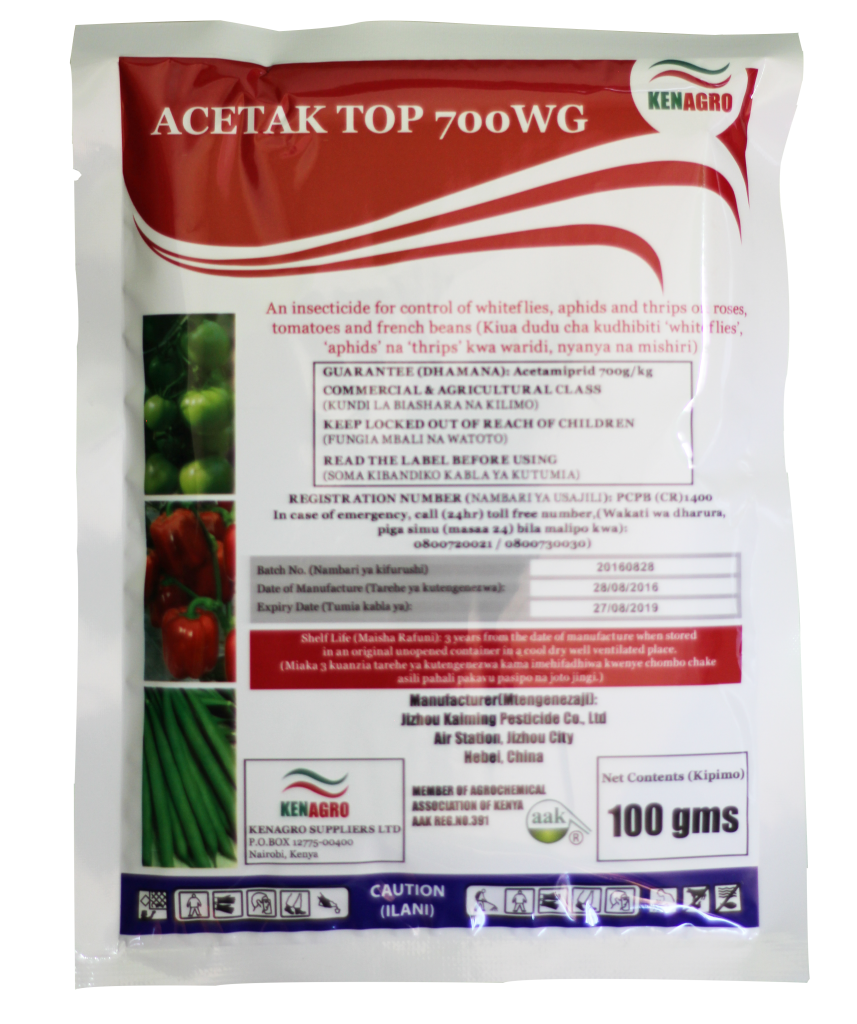
A highly effective active ingredient is Acetamiprid, which works by affecting the nervous system of the insect, stopping feeding and leading to their control.
Recommended Product: Acetak Top 700WG by Kenagro Suppliers Limited
- Contains Acetamiprid 700g/Kg.
- Fast-acting and effective against whiteflies.
- Helps reduce pest population and protect crop health.
How to Use
- Spray Acetak Top 700WG, when whiteflies are first noticed, at the rate of 2.5g/20L of water.
- Target the underside of leaves where the pests stay.
- Always follow label instructions for correct dosage and timing.
- Repeat application if necessary, after 7 days, depending on infestation level.
Whiteflies can spread quickly and cause serious crop losses if ignored. Understanding their life cycle and identifying them early is key to effective control.
Combining good agronomic practices with timely chemical control using Acetamiprid (Acetak Top 700WG) will help keep your crops healthy and productive.
Healthy crops start with early action—don’t wait until the damage is severe.