Understanding and Controlling Citrus Canker in Citrus Fruits
Citrus farming is an important source of income and nutrition for many households in Kenya. However, one major challenge farmers face is Citrus Canker, a disease that can significantly reduce yield and fruit quality if not well managed.
What is Citrus Canker?
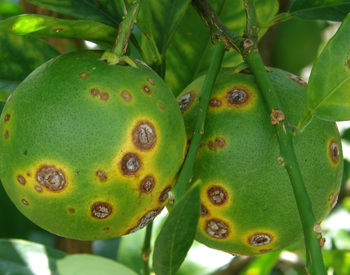
Citrus Canker is a bacterial disease that affects citrus crops such as oranges, lemons, pixies, tangerines, limes, and grapefruits. It is caused by a bacterium known as Xanthomonas citri. The disease spreads easily, especially in warm, wet, and windy conditions.
Stages of Citrus Canker
Citrus Canker develops in stages, which farmers can observe:
- Early Stage
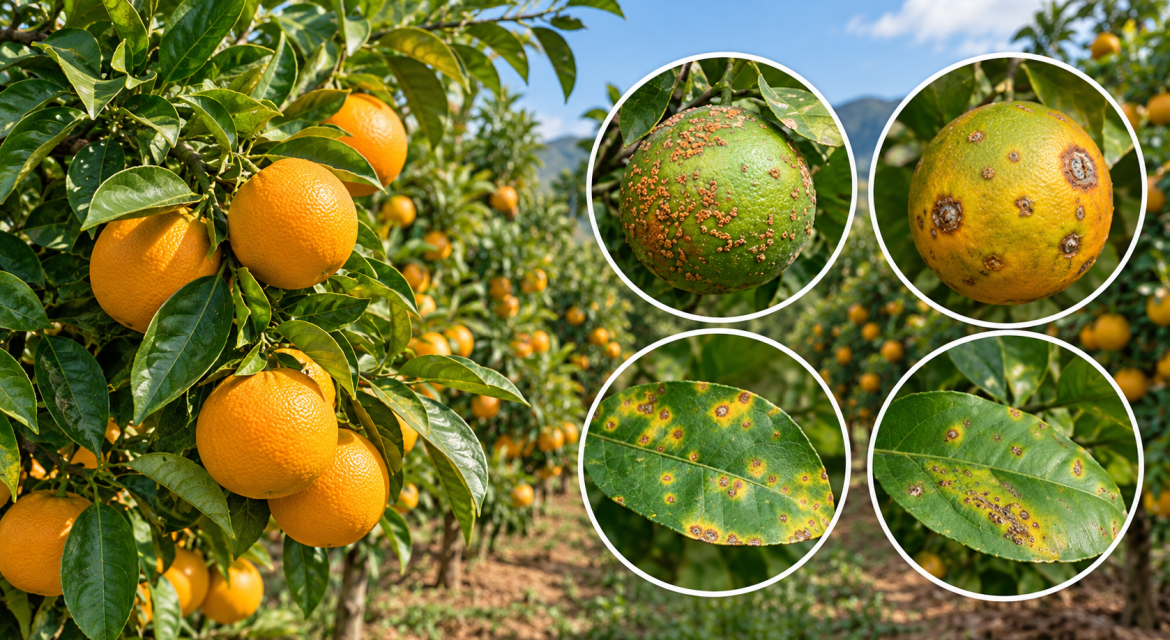
Small, raised spots appear on leaves, stems, or fruits. These spots may look oily or water-soaked. - Intermediate Stage
The spots enlarge and become brown with a rough surface. A yellow halo often forms around them. - Advanced Stage
Lesions become corky and crater-like. Leaves may fall off, fruits may drop early, and branches can weaken.
How Citrus Canker Manifests
The disease can be identified through several visible signs:
- Raised lesions on leaves, fruits, and stems
- Yellow rings around the spots
- Premature leaf and fruit drop
- Scarring on fruits, making them less marketable
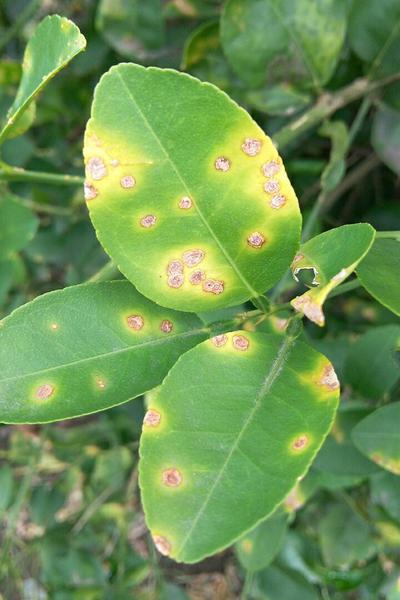
Even though infected fruits are usually safe to eat, their appearance reduces their value in the market.
What Causes the Spread?
Citrus Canker spreads through:
- Wind-driven rain
- Infected tools and equipment
- Movement of infected seedlings
- Human handling (hands, clothing)
This means poor farm hygiene can quickly worsen the problem.
Agronomic Practices to Prevent Citrus Canker
Prevention is always better than cure. Farmers can reduce the risk by adopting good practices:
- Use certified disease-free seedlings
- Maintain proper spacing to allow airflow
- Prune infected branches and destroy them safely
- Disinfect tools regularly
- Control wind exposure using windbreaks
- Avoid working in wet fields, as this spreads the bacteria
These simple steps can greatly reduce infection rates.
Agronomic Solutions for Control
When Citrus Canker appears, timely action is important. One effective approach is the use of recommended bactericides.
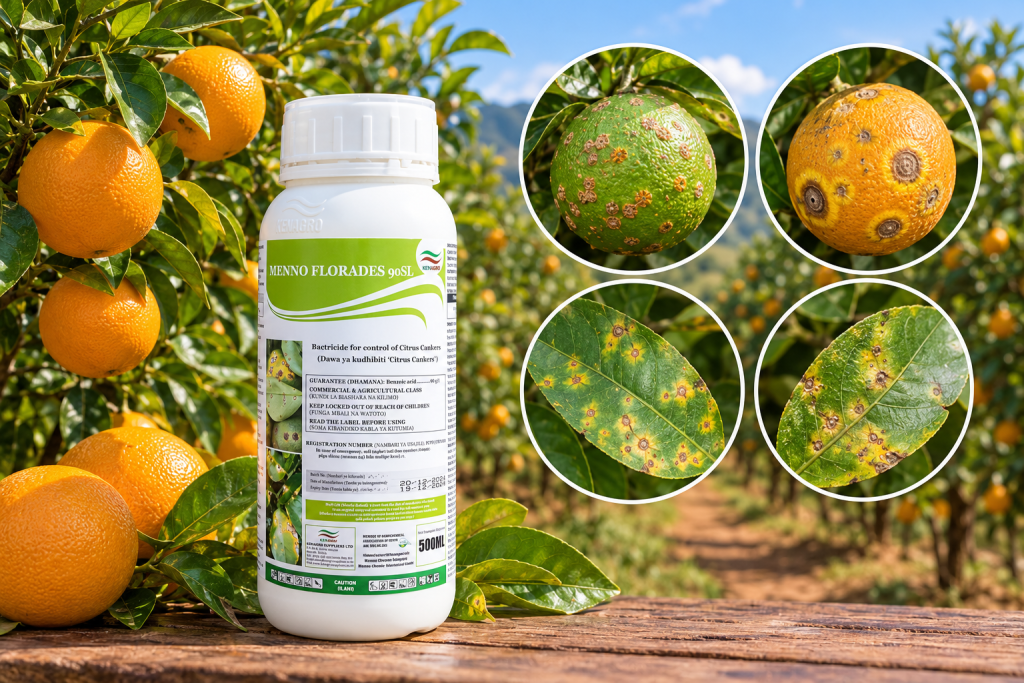
A proven active ingredient for control is Benzoic Acid, which helps suppress the bacteria responsible for the disease.
Farmers can use Menno Florades 90SL, a product from Kenagro Suppliers Limited. It contains Benzoic Acid (90 g/L) and works effectively in managing Citrus Canker when applied as recommended.
Key Tips for Effective Use
- Apply early when symptoms first appear
- Ensure full coverage of leaves and fruits
- Follow the recommended dosage and intervals
- Combine with good farm hygiene practices for best results
Citrus Canker is a serious but manageable disease. By understanding its stages, causes, and symptoms, farmers can take the right steps to protect their crops. Combining good agronomic practices with effective solutions like Benzoic Acid-based products such as Menno Florades 90SL can help maintain healthy citrus trees and improve yields.