Capsicum (pepper) farming can give good profits, but pests like aphids can quickly reduce yields if not controlled early. Knowing how aphids behave and how to manage them will help you protect your crop.
1. What are Aphids?
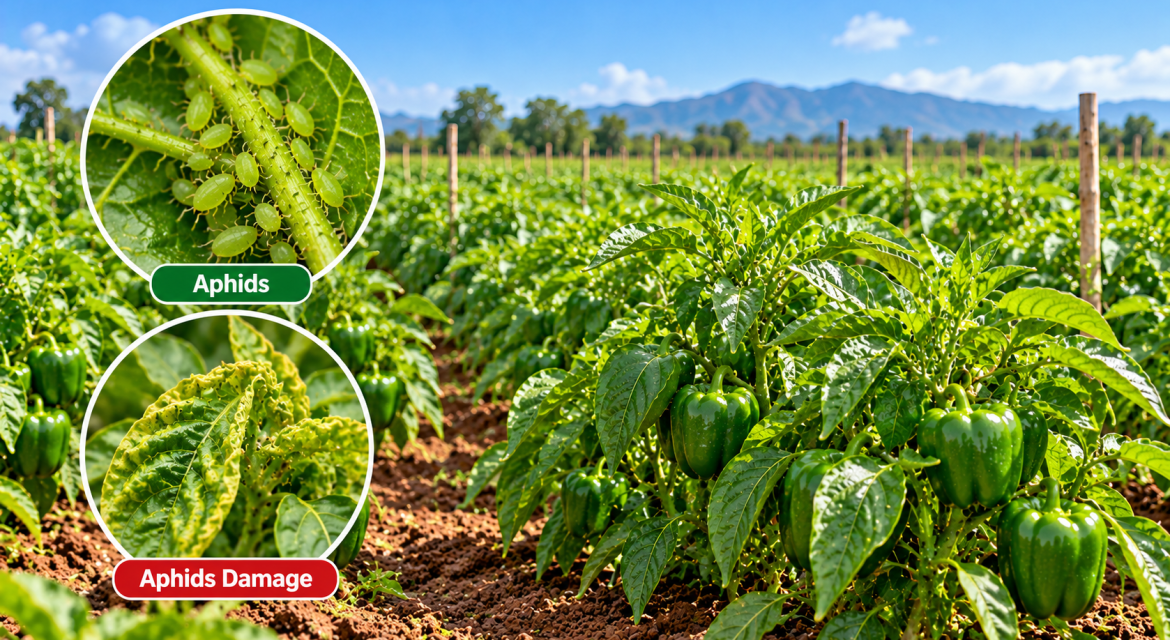
Aphids are very small, soft-bodied insects that suck sap from plants. They are usually green, black, or brown and are commonly found on the underside of leaves and young shoots.
They multiply very fast and can spread across your farm in a short time.
2. Stages of Aphids (Life Cycle)
Aphids have a simple but fast life cycle:
a) Nymph Stage
- Young aphids (nymphs) look like small adults.
- They start feeding immediately after birth.
b) Adult Stage
- Adults continue feeding and reproducing.
- Many aphids give birth to live young without laying eggs.
👉 Because they reproduce quickly, aphid populations can increase very fast within a few days.
3. How Aphids Affect Capsicum
Aphids damage capsicum in several ways:
- Suck sap from leaves and stems
- Cause leaves to curl, yellow, and weaken
- Slow down plant growth
- Produce sticky substance (honeydew) that leads to black mold (sooty mold)
- Spread plant diseases (viruses)
If Not Controlled:
- Poor plant growth
- Low fruit quality and size
- Reduced yields
- Possible total crop loss in severe cases
4. Best Agronomic Practices for the Control of Aphids in Capsicum
Before using chemicals, good farming practices can help reduce aphid attack:
a) Field Monitoring
- Check your crop regularly, especially under leaves.
b) Remove Infested Parts
- Prune and destroy heavily infested leaves or plants.
c) Weed Control
- Remove weeds that can host aphids.
d) Proper Spacing
- Avoid overcrowding to improve air circulation.
e) Use of Natural Enemies
- Encourage beneficial insects like ladybirds that feed on aphids.
f) Avoid Excess Nitrogen
- Too much nitrogen fertilizer encourages aphid multiplication.
5. Chemical Control (Spraying)
When aphid infestation becomes serious, spraying is necessary.
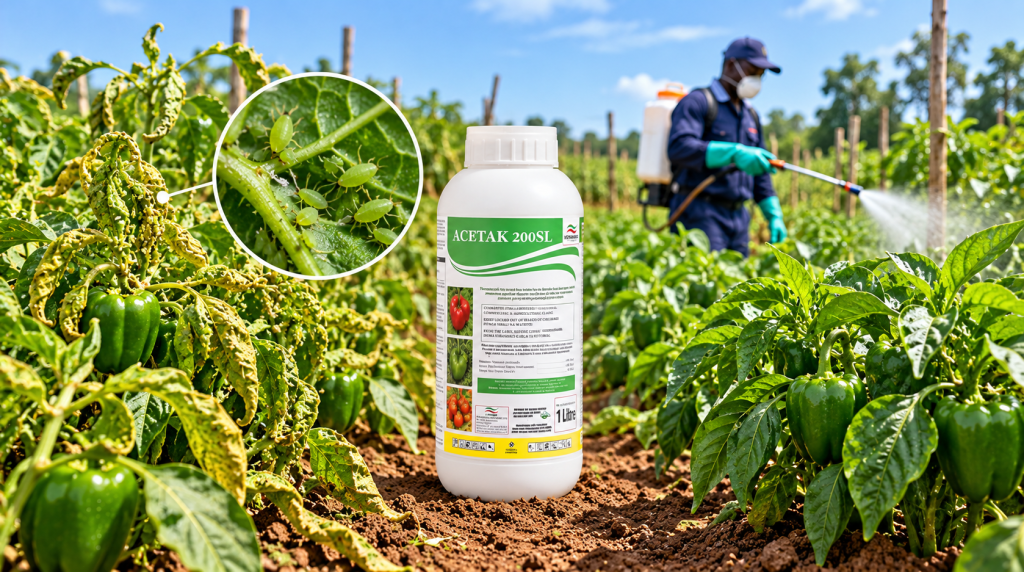
Recommended Active Ingredient:
- Acetamiprid
It works by:
- Affecting the nervous system of aphids
- Stopping feeding
- Killing both nymphs and adults
Recommended Product:
- ACETAK 200SL
- Contains:
- Acetamiprid 200g/L
- Contains:
How to Use:
- Spray when aphids are first noticed.
- Target the underside of leaves where aphids hide.
- Ensure full coverage of the plant.
- Follow label instructions for correct dosage and safety.
6. Important Tips for Farmers
- Start control early before infestation spreads.
- Combine good agronomic practices with spraying.
- Spray at the right time (early morning or late evening).
- Always wear protective gear when handling chemicals.
Aphids can cause serious damage to capsicum, but they are easy to manage if detected early. By combining good farming practices with effective products like ACETAK 200SL, farmers can protect their crops, improve yields, and increase profits.
Regular monitoring and quick action make all the difference.