Termites are among the most destructive pests in farming and construction. They feed on wood and can cause serious damage to buildings, trees, fencing posts, and other wooden materials if not controlled early.
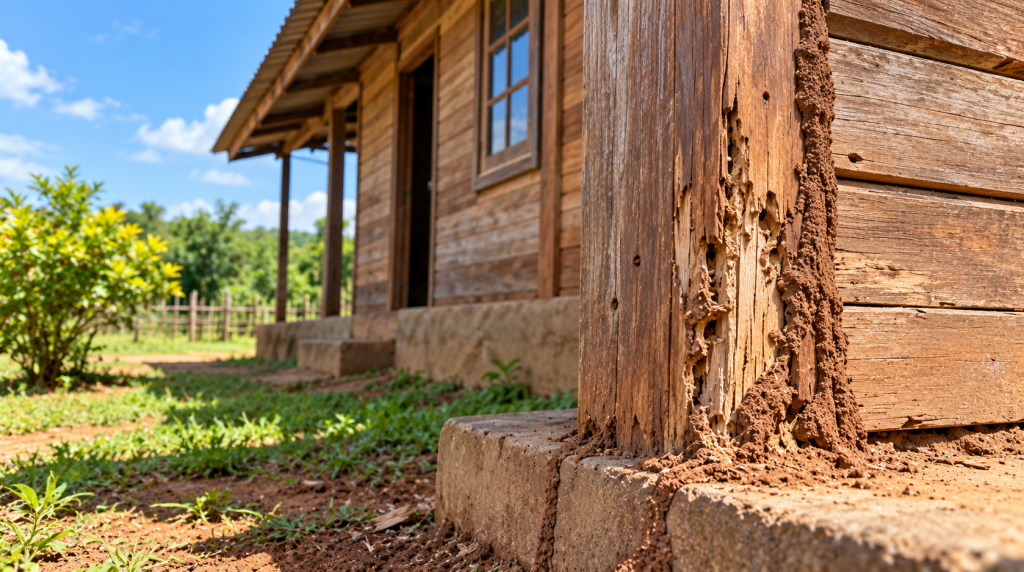
Termites are small insects that live in colonies, mostly underground. They feed on materials that contain cellulose, such as wood, dry grass, and plant debris. Because they often attack from the inside, damage may go unnoticed until it becomes severe.
Stages of Termite Infestation
Termite damage develops over time in stages:
- Early Stage
Termites begin feeding on wood from the inside. There may be little or no visible damage on the surface. - Intermediate Stage
Hollow sounds are noticed when wood is tapped. Mud tubes may appear on walls, timber, or soil surfaces. - Advanced Stage
Severe damage occurs. Wood becomes weak, cracked, or collapses. Trees may dry up, and structures can become unsafe.
How Termite Damage Manifests
Farmers and builders can identify termite problems through:
- Hollow or damaged wood
- Presence of mud tubes on surfaces
- Wood that easily breaks or crumbles
- Wilting or drying trees without clear cause
- Fallen or weakened fencing posts
Early detection is key to preventing major losses.
What Causes Termite Infestation?
Termites thrive in certain conditions, including:
- Presence of untreated wood
- Moist environments or poor drainage
- Wood in contact with soil
- Poorly maintained structures
- Accumulation of wood debris around farms or buildings
These conditions create a favorable environment for termites to grow and spread.
Agronomic and Preventive Practices
To reduce the risk of termite attack, consider the following:
- Use treated wood for construction and fencing
- Avoid direct contact between wood and soil
- Clear wood debris and stumps from fields
- Ensure proper drainage to reduce moisture
- Inspect structures and trees regularly
- Treat soil before construction where necessary
These practices help limit termite entry and survival.
Agronomic Solutions for Termite Control
When termites are present or as a preventive measure, the use of effective termiticides is essential.
One proven active ingredient is Chlorpyrifos, which works by targeting the nervous system of termites, effectively eliminating them and protecting treated materials.
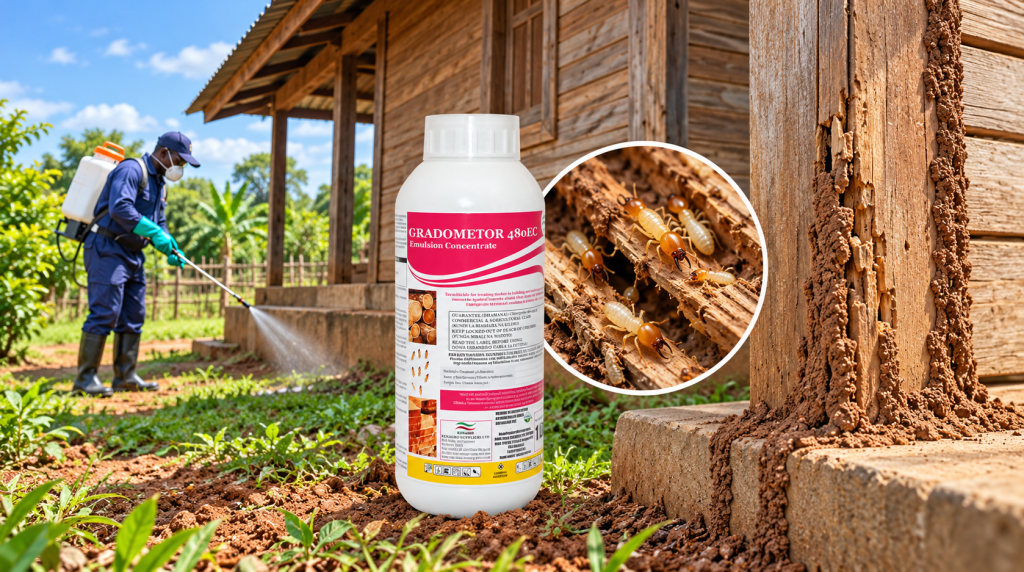
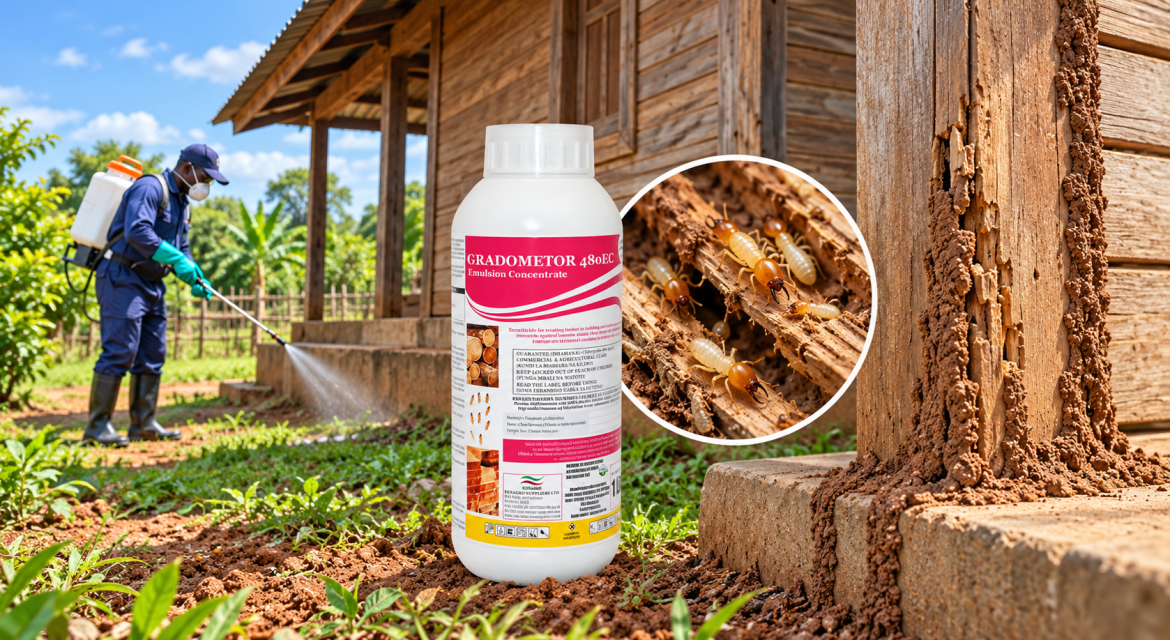
A reliable solution is Gradometor 480EC, a product designed for termite control in:
- Timber used in building and construction
- Trees and plantations
- Fencing poles and posts
- Other wood-related materials
It provides strong protection by preventing termite attack and extending the life of treated wood.
Key Tips for Effective Use
- Treat timber before use in construction
- Apply to soil around structures and fence lines
- Ensure even and thorough application
- Follow recommended dosage and safety guidelines
- Combine with good management practices for best results
Termites can cause costly damage, but they can be effectively managed with the right approach. By understanding how termites attack and adopting preventive practices, farmers and builders can protect their investments. Using trusted solutions like Chlorpyrifos-based products such as Gradometor 480EC ensures long-lasting protection for timber, trees, and structures.